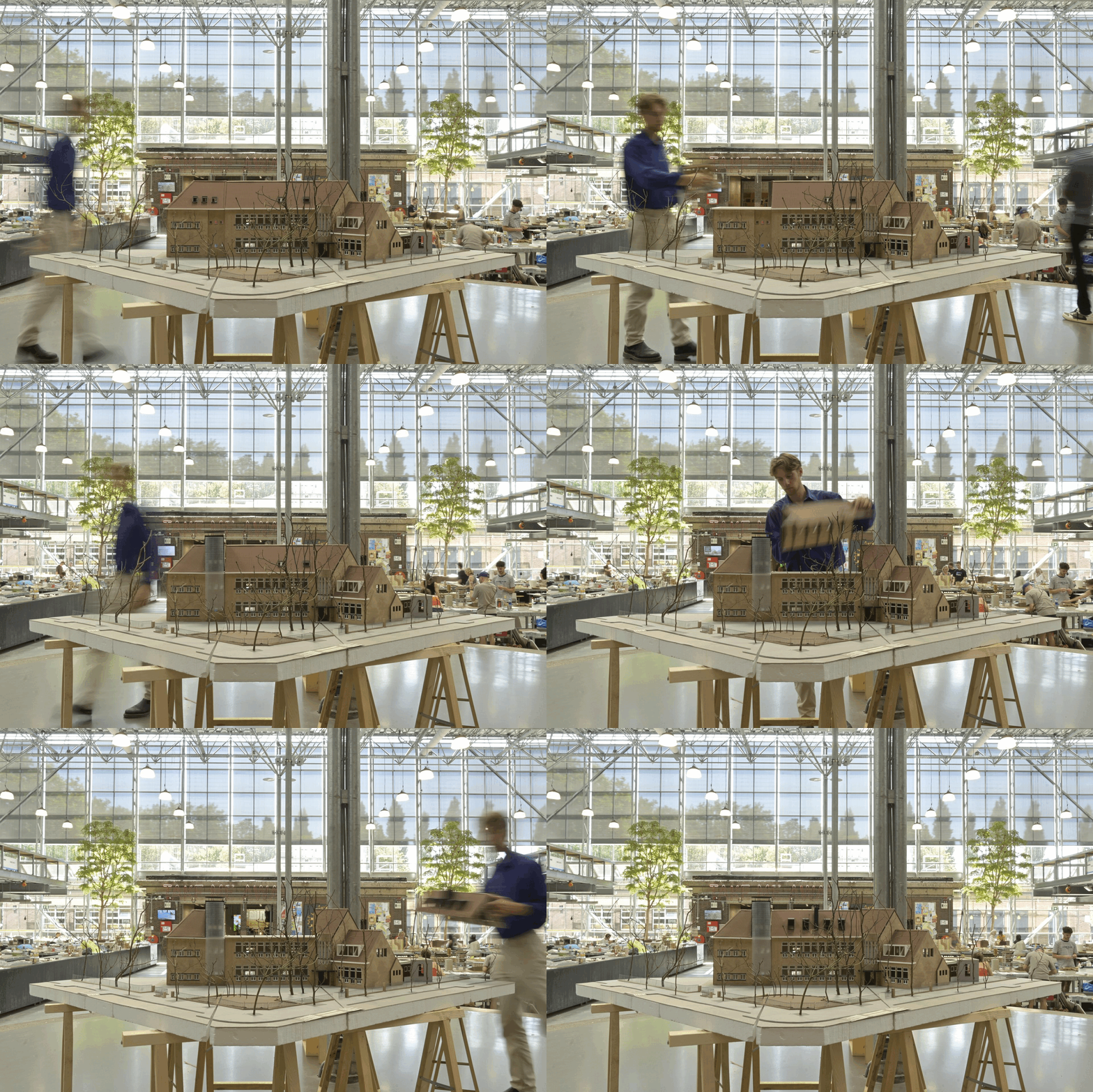
The project aims to offer a solution to building climate and spatial problems through relatively small interventions in the roof and facade. The existing building, a 1960s primary school in Delft (NL) suffers from heat stress in several of its classrooms and lacks the space needed for individual guidance. To address this, chimney introduces a strong architectural element to collectively solve these problems. This element, a solar chimney, elegantly revises simple principles of natural ventilation. A large glass surface proved challenging to integrate into a monumental context, prompting the extensive use of glass blocks to approach the existing form language. The end result is a balanced roof and facade intervention that adds a new quality to the building without compromising its character.
The introduced solar chimney operates on the simple, old principle of hot air ascending and creating a pressure difference. A large glass surface on the east side acts as a shaft that warms the air and accelerates it upward. This façade was chosen for its appropriate rhythmicity, as well as its location near the rooms that experience the greatest heat stress. By insulating the heat chamber from the building and connecting it with ventilation grilles, the warm air in the rooms can be immediately extracted as soon as heat stress occurs. Fresh air is drawn in through the cool west side of the building. Because the chimney must extend above the roof ridge, the structure can be extended across the entire roof width. The resulting space is naturally lit and provides the necessary space for individual support. The approach to materials in this project is closely linked to the characteristics of the characteristic building. The elegance and detailing of the existing materials demand a suitable approach to form, texture, and scale. An analysis of the existing rhythm provided the basis for the lines of the intervention. The interrupting verticality of the chimney divides the facade and forms a counterpart to the atrium located on the right. The elegance of its form and lightness are echoed in the design of the chimney, which takes on the form of a high curved wall in textured glass blocks. The rest of the extension is crafted from Yakisugi wood, adding to the texture and character of the extension. Central to chimney is reading and understanding an existing building structure and its translation into a suitable intervention that meets contemporary requirements. It shows a contemporary intervention does not have to either imitate or challenge an existing monumental context, but can use it as inspiration in shaping its own identity.