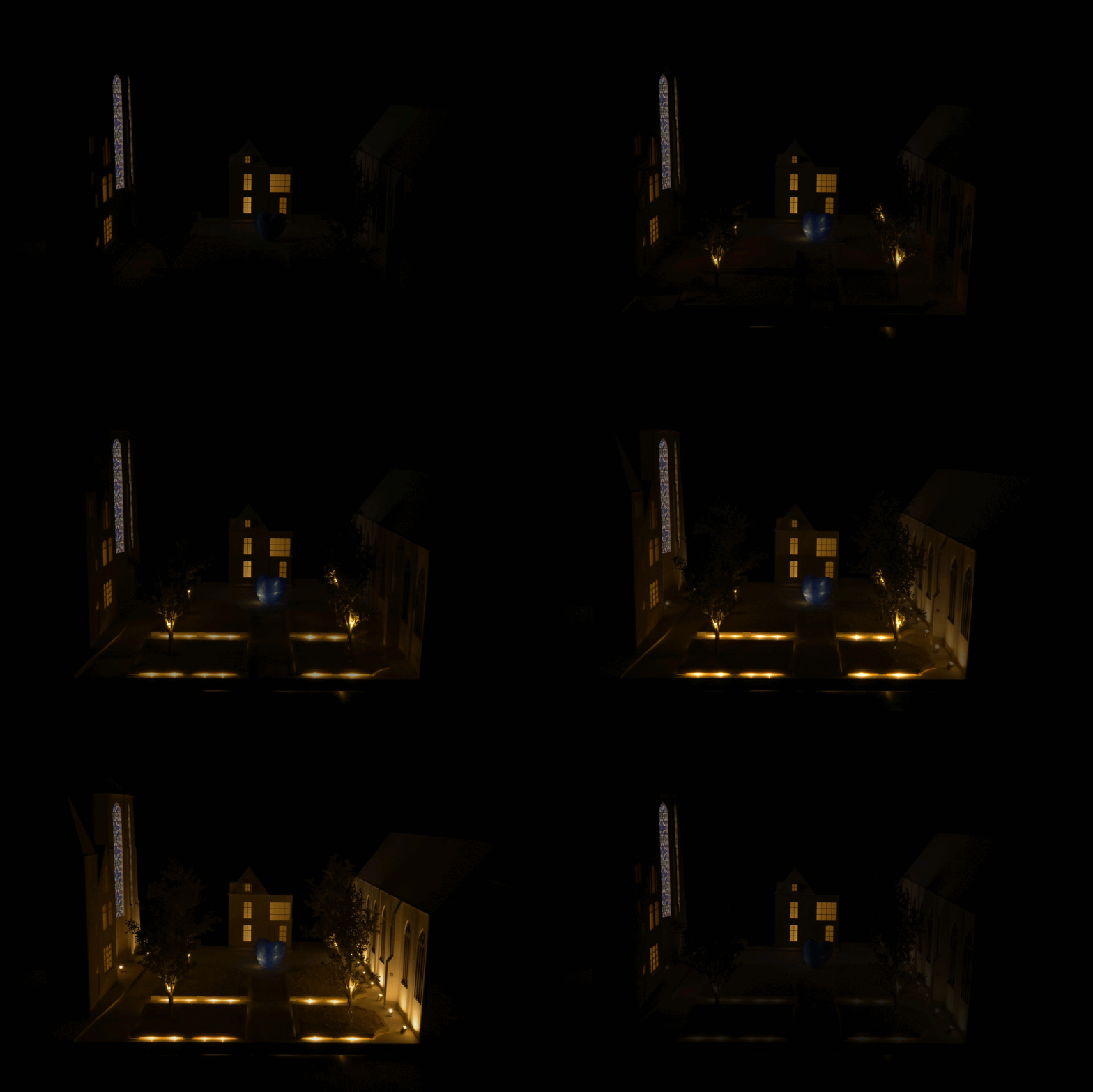
Architecture is often designed for and appreciated in daylight, while this makes up merely half of the day. At night, a designer reveives a whole different canvas and new tools: artificial lighting. This offers the power to emphasize specific qualities of existing architecture, as well as to shape the atmosphere of the public space.
In the current situation, the public space around the Nieuwe Kerk is dominated by busy traffic and poor lighting conditions, resulting in an unpleasant atmosphere for pedestrians. This project reimagines the public space around the Nieuwe Kerk in Delft with spatial interventions and a new, pronounced lighting plan. Guiding in this design was building the plan through three different layers: 1) ambient, 2) task and 3) accent lighting. Moreover, the monumental context was of significant value in defining an atmosphere that highlights and respects its cultural-historical value. This approach resulted in a lighting plan that analyses the atmosphere of the church's interior lighting and translates this to the adjecent public space.
The ambient layer forms the base of the lighting plan and provides a comfortable light level for pedestrians to navigate the public space. This is achieved with lighting in the existing trees and by placing grazing lights against the monumental facades. The grazing lights emphasize the texture of the brickwork and highlight the architectural details of the monumental facade. The focus layer provides task lighting for specific functions in the public space, such as pathways and seating areas. The new seating areas are illuminated with a floor grazing light that create a focus point in the plan. Lastly, extra light accents in the stained church windows and in the Blue Heart sculpture add brilliance: they offer a strong visual interest to the atmosphere.